What To Do If an Off-Lead Dog Approaches Yours
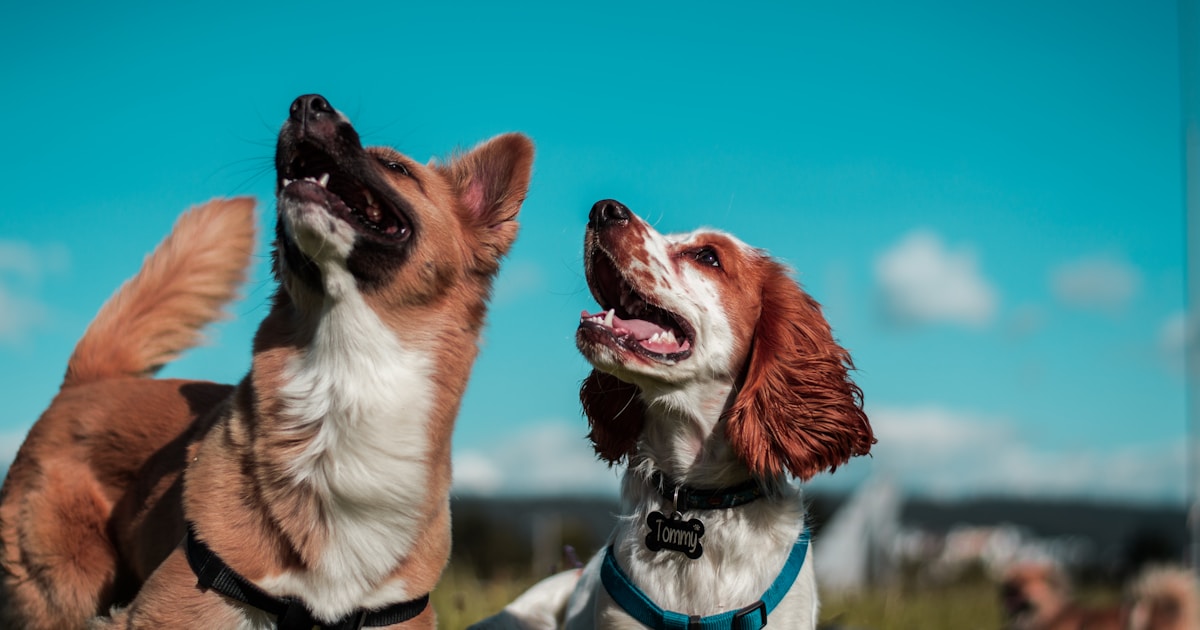
It's one of the most common and most stressful scenarios in dog walking: you're out with your dog on the lead, minding your own business, when an unfamiliar off-lead dog comes bounding towards you. Your heart rate spikes. Your dog tenses up. And somewhere in the distance, the other owner shouts the least helpful words in the English language: "Don't worry, he's friendly!"
Whether your dog is reactive, nervous, recovering from surgery, in season, or simply not interested in meeting a stranger, this situation can be genuinely frightening. Here's a practical guide to handling it - calmly, safely, and with your rights in mind.
Step 1: Stay calm (your dog is reading you)
This is the hardest part, but it's also the most important. Dogs are extraordinarily sensitive to their owner's emotional state. If you panic, tense up, or start shouting, your dog will pick up on that energy and escalate their own response.
Take a breath. Keep your voice low and steady. Your goal isn't to control the approaching dog - it's to keep your own dog as calm as possible while you manage the situation.
This doesn't mean you should be passive. It means you should be controlled. There's a difference between calm authority and frozen panic, and your dog knows which one you're projecting.
Step 2: Position yourself between the dogs
If you can, step in front of your dog so that your body is between them and the approaching dog. This serves two purposes: it gives your dog a physical barrier (which can reduce their anxiety), and it signals to the approaching dog that they need to get through you first.
Stand tall but relaxed. Avoid direct eye contact with the approaching dog, as this can be interpreted as a challenge. If the dog is charging at speed, turn slightly sideways - it makes you look less confrontational while still blocking the path.
If your dog is small enough, you might consider picking them up. This is a judgement call - picking up a nervous dog can sometimes increase their anxiety, but it also physically removes them from the situation. Use your knowledge of your own dog to decide.
Step 3: Use a firm, clear voice
You're perfectly within your rights to tell the approaching dog "No!" or "Go away!" in a firm, authoritative voice. Many off-lead dogs will respond to a confident command, even from a stranger. You don't need to shout - just be clear and assertive.
If the other owner is within earshot, call out to them directly: "Please call your dog back. Mine isn't friendly" or "My dog needs space - please recall yours." You don't owe anyone an explanation for why your dog is on a lead. But a clear, direct request is harder to ignore than a vague wave.
Don't say "It's okay" to the approaching dog, even instinctively. Dogs don't understand the words, but a soft, reassuring tone can be interpreted as an invitation to come closer.
Step 4: Avoid these common mistakes
In the heat of the moment, it's easy to make things worse without realising. Here are the most common mistakes to avoid:
- Don't pull your lead tight and hold your dog close. A tight lead increases tension (literally and figuratively) and can make your dog feel trapped. Keep a little slack in the lead if you can
- Don't kick or hit the approaching dog. Apart from being unkind, it's likely to provoke aggression. The exception is if the dog is actively attacking - in that case, your priority is protecting your dog and yourself
- Don't run. Running triggers chase instinct in most dogs. Walk away briskly if you can, but don't sprint
- Don't let your frustration out on the other owner in the moment. However justified your anger is, a confrontation between owners escalates stress for both dogs. Deal with the situation first, then address the owner
- Don't assume the approaching dog is aggressive. Most off-lead dogs that run over are simply overexcited and poorly recalled. That doesn't make it acceptable, but it does mean the situation is usually more annoying than dangerous
What to say to the other owner
This is where it gets socially awkward, but it matters. Many off-lead dog owners genuinely don't understand why their dog's behaviour is a problem. They think because their dog is friendly, everyone should be happy to see them.
A few phrases that tend to work well:
- "My dog is in training and needs space, please." Most people respect this, even if they wouldn't respect "my dog is reactive"
- "My dog has just had surgery and can't be jumped on." Medical reasons tend to get immediate compliance
- "Could you put your dog on a lead? Mine isn't comfortable with off-lead dogs." Direct, polite, hard to argue with
You shouldn't have to justify your dog being on a lead. But in practice, giving a brief reason often gets faster results than standing on principle. Choose the approach that works for you and your stress levels.
"Your dog being friendly doesn't mean every other dog wants to be their friend. Consent goes both ways."
The legal position in the UK
UK law is actually quite clear on this, though many dog owners aren't aware of it. Under the Dangerous Dogs Act 1991 and the Anti-social Behaviour, Crime and Policing Act 2014, a dog doesn't have to bite someone to be considered "dangerously out of control." If a dog causes someone to feel that it might injure them, that can be sufficient.
More practically, the Countryside Code requires dogs to be "under effective control" at all times. A dog that ignores recall and runs up to strangers is, by definition, not under effective control - regardless of whether it's "friendly."
Local authorities also have the power to issue Public Spaces Protection Orders (PSPOs), which can require dogs to be on leads in specific areas. Many parks, cemeteries, and play areas in the UK have these in place. Owners who ignore them can be fined.
If an off-lead dog injures your dog, the owner of the off-lead dog is liable for veterinary costs under civil law. Keep any vet receipts and, if possible, get the other owner's contact details at the time of the incident.
After the encounter
Once the situation is resolved and the dogs are separated, give your dog time to decompress. Don't immediately continue your walk as if nothing happened. Stop somewhere quiet, offer water, and let your dog sniff and settle. Some dogs recover in minutes; others need the rest of the walk to calm down.
If your dog was distressed, consider cutting the walk short. There's no shame in turning around and going home. Pushing through a stressful walk doesn't build resilience - it just adds to the stress bank.
If the encounter happens regularly in the same location, consider changing your route or walking at different times. It's not fair that you should have to, but your dog's wellbeing comes first.
How Go Rocco helps you avoid these situations
This is exactly the kind of scenario Go Rocco was built for. The live map shows you where other dogs are walking nearby and, crucially, what their temperament is. If you can see a cluster of green (friendly) dogs in the park - dogs that are likely off-lead - you can choose a quieter route before you even get close.
For owners of reactive or nervous dogs, that advance warning is invaluable. Instead of rounding a corner and suddenly being face-to-face with an off-lead Labrador, you can see them coming from 200 metres away and take a different path.
It's not about avoiding other dogs forever. It's about giving you the information to choose your encounters rather than having them forced on you.
See dogs before they see you
Go Rocco's live map shows nearby dogs and their temperaments, so you can plan safer walks for your dog.
Download on the App StoreThe bigger picture
Off-lead dog encounters are one of the biggest sources of stress for UK dog owners - particularly those with reactive, nervous, or recovering dogs. The solution isn't to ban off-lead walking (most dogs thrive with off-lead exercise), but to build a culture of better awareness, better recall training, and more consideration for others. Dogs Trust offers free resources on recall training that can help every owner improve their dog's responsiveness.
If your dog has reliable recall, that's brilliant - but it still means asking before approaching another dog. If your dog doesn't have reliable recall, then they shouldn't be off-lead in areas where they'll encounter other dogs. It's that simple.
Every dog deserves a safe walk. And "safe" means something different for every dog. The more we understand that, the better our walking culture becomes - for everyone.